Easy Shrimp Fried Rice Recipe Without Vegetables (Quick & Simple)
Ever felt like dinner could be ready before you even order takeout? That’s the magic of making shrimp fried rice at home. You get the flavors you love, the ingredients you pick, and the joy of cooking like a pro.
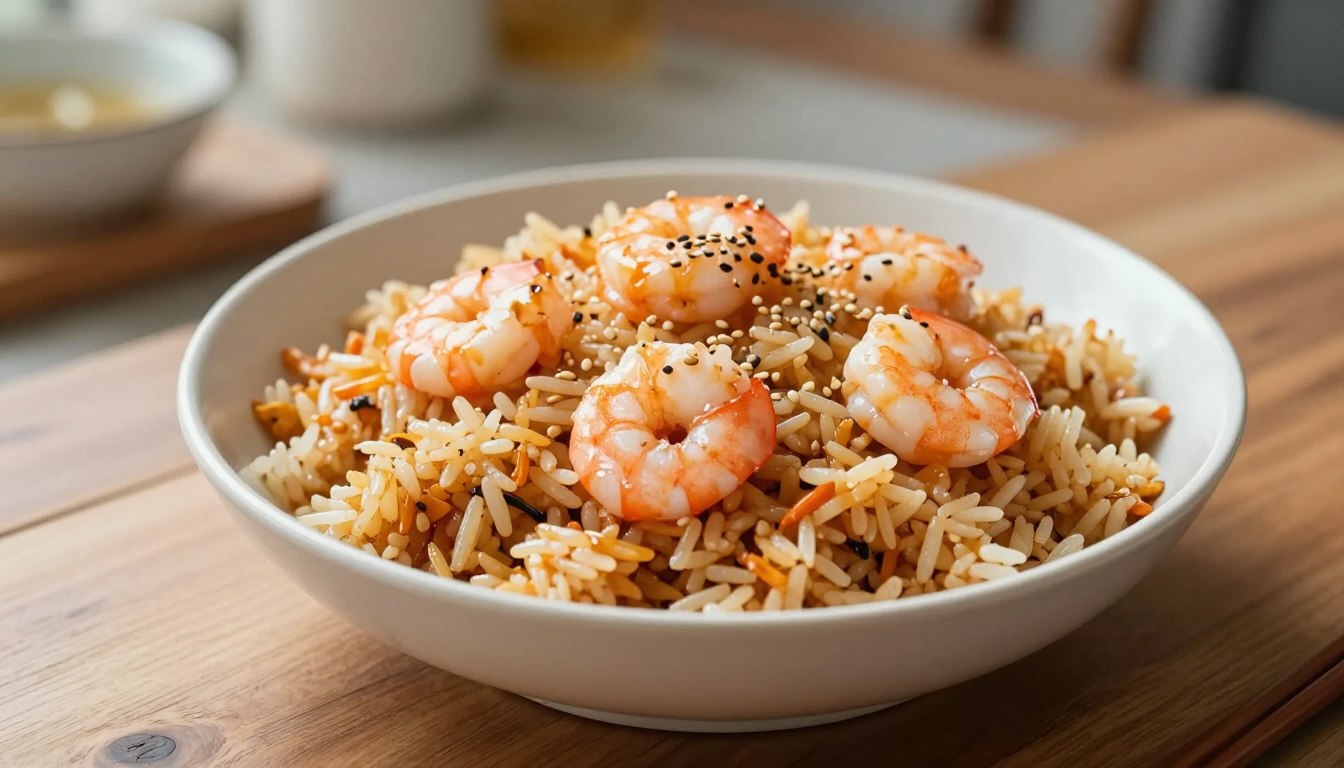
This shrimp fried rice recipe is easy and doesn’t need veggies. It’s all about fluffy rice, tender shrimp, and fluffy eggs in one pan. It tastes like your favorite Chinese restaurant, but you make it yourself.
Making simple shrimp fried rice takes just 10 to 20 minutes. The secret is using the right heat, rice, and techniques. It’s not about complicated steps or special ingredients.
Shrimp fried rice is perfect for busy nights or when you want to impress. You’ll use fresh shrimp, common pantry items, and simple spices. It’s better than takeout because you know what’s in it.
Key Takeaways
- You can make restaurant-quality shrimp fried rice at home in under 20 minutes with simple ingredients
- Day-old rice is essential for achieving fluffy, non-sticky grains that fry properly
- This one-pan meal requires minimal cleanup and costs less than takeout
- Proper heat and technique matter more than a long list of ingredients
- Fresh or frozen shrimp both work well when handled correctly
- You’ll learn exactly which rice varieties work best for the perfect texture
Why This Easy Shrimp Fried Rice Recipe Without Vegetables Works So Well
The secret to great shrimp fried rice is knowing how moisture affects your rice. Many struggle with sticky, clumpy rice because they ignore the rice texture. Your rice must be just right before you cook it.
The difference between amazing and disappointing fried rice is in the rice prep. Learning this secret can change your cooking game.
The Secret to Fluffy, Non-Sticky Rice
To make fluffy fried rice, your rice must separate easily. Fresh rice is too moist and steams instead of frying. This makes the grains stick together, creating clumps.
To avoid sticky rice, use rice that has dried out a bit. The key is:
- Proper grain separation in the pan
- High heat for crisping
- Moisture content between 12-14 percent
- Individual grains that don’t clump
Why Day-Old Rice Makes All the Difference
Day-old rice is better because it has less moisture. Refrigeration removes excess water from cooked rice. This makes the rice perfect for frying.
If you don’t have leftover rice, spread fresh rice on a baking sheet. Let it cool for 30 minutes. This trick helps you achieve the right texture without waiting overnight.
Using the right rice preparation method ensures fluffy fried rice every time.
Key Ingredients You’ll Need for Simple Shrimp Fried Rice
Making simple shrimp fried rice is easier than you think. This recipe is all about simplicity. You won’t need a long list of ingredients or hard-to-find items. Most of what you need is probably already in your kitchen.
Start with what you already have. Use day-old cooked rice to avoid a mushy texture. You’ll also need quality oil, eggs, and shrimp. These three ingredients make the dish delicious.
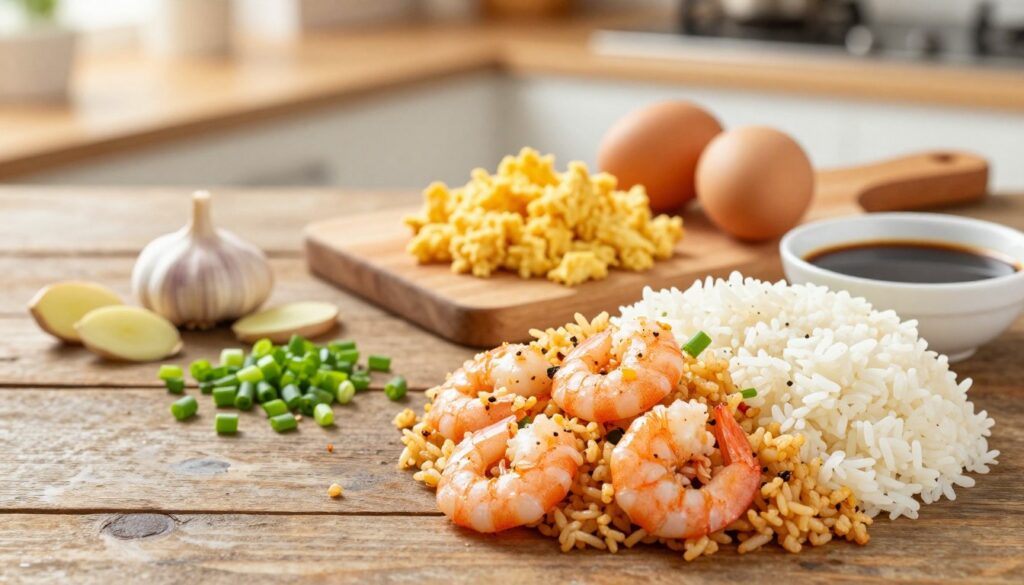
- Day-old cooked rice (4 cups)
- Olive oil or vegetable oil (2 tablespoons)
- Eggs (2-3 large)
- Shrimp (1 pound, peeled and deveined)
- Soy sauce (3-4 tablespoons, preferably low-sodium)
- Sesame oil (1 tablespoon)
- Salt and pepper to taste
You can enhance your dish with optional ingredients. Add minced garlic for a deeper flavor. Ground ginger adds a warm touch. Green onions make a great garnish. Chicken stock powder adds a rich, savory taste.
“The best dishes come from simple, quality ingredients prepared with care.”
Each ingredient in your shrimp and rice recipe has a purpose. Eggs add richness and create golden pieces. Soy sauce brings umami and saltiness. Sesame oil adds a nutty aroma. Knowing each ingredient’s role helps you make the most of what you have, ensuring delicious results every time.
The Best Type of Rice and Shrimp to Use
Choosing the right ingredients is key to a great shrimp fried rice dish. The type of rice and shrimp you pick will change the dish’s texture, taste, and quality. Your choice depends on what you have, your budget, and your taste. Let’s look at the best options for both.
Choosing Between Jasmine and Basmati Rice
Jasmine rice is the top pick for fried rice. It cooks up fluffy and separate, making your dish look like it came from a restaurant. This is because the grains don’t clump together.
Basmati rice is also great for shrimp fried rice. It has a unique flavor and elegant, long grains. The grains stay separate during cooking, making your dish look and taste amazing.
If you want something healthier, try brown rice. Just make sure it’s cooled down completely before cooking. Day-old rice is best for both jasmine and basmati.
Fresh vs Frozen Shrimp: What Works Best
The debate between fresh and frozen shrimp is about taste and convenience. Fresh shrimp tastes better and has a better texture. It’s more flavorful and delicate.
Frozen shrimp is cheaper and easy to find. It’s perfect if you thaw it right and pat it dry before cooking. This stops it from adding too much water to your rice.
Go for medium or large shrimp for the best results. Smaller shrimp get lost in the rice. But medium to large shrimp stay juicy and visible.
- Medium shrimp: 21-25 count per pound
- Large shrimp: 16-20 count per pound
- Pat shrimp dry before cooking
- Thaw frozen shrimp in the refrigerator overnight
How to Make Shrimp Fried Rice Without Vegetables Step-by-Step
Making shrimp fried rice is easier than you think. This quick recipe takes about 10 to 15 minutes. Just follow each step carefully for perfect results.
Begin by mixing 2 to 3 eggs with salt and pepper in a bowl. Heat 1 tablespoon of oil in a large skillet over medium-high. Pour the eggs into the pan and cook like a thin omelet for 1 to 2 minutes. Flip and cook for another minute, then chop into small pieces. Set aside on a clean plate.
Next, add another tablespoon of oil to the skillet. Season your shrimp with salt and pepper, then cook them in the pan. Cook for 2 to 3 minutes on each side until they’re pink and golden. Remove the shrimp from the pan and set aside with the eggs.
To add flavor, add sesame oil and aromatics like garlic or ginger to the pan. Cook for about 1 minute until the kitchen smells great. This step adds depth to your shrimp fried rice.
Add your day-old rice to the pan, breaking up clumps with a spoon. Pour soy sauce over the rice and toss to coat the grains evenly. This simple step spreads the flavor throughout your dish.
Return the cooked shrimp and chopped eggs to the pan. Toss all the ingredients together for 1 to 2 minutes until everything is hot. Serve hot, garnished with sliced green onions if desired.
- Beat eggs with salt and pepper
- Cook eggs as a thin omelet, then chop into pieces
- Cook shrimp 2 to 3 minutes per side until pink
- Add aromatics like garlic or ginger
- Mix in day-old rice and break up clumps
- Pour soy sauce over rice and toss
- Combine shrimp and eggs back into the pan
- Heat everything together for 1 to 2 minutes
This quick shrimp fried rice recipe is easy to follow. Prepare your ingredients ahead of time for a smooth cooking process. The result is a delicious dish that tastes like it came from a restaurant.
Essential Cooking Tips for Restaurant-Quality Results
To make restaurant quality shrimp fried rice at home, you need to master two key cooking skills. These skills make your shrimp fried rice better than what you get from takeout. Learning about heat control and preparation will help you make the best shrimp fried rice your family loves.
Why High Heat Is Critical for Fried Rice
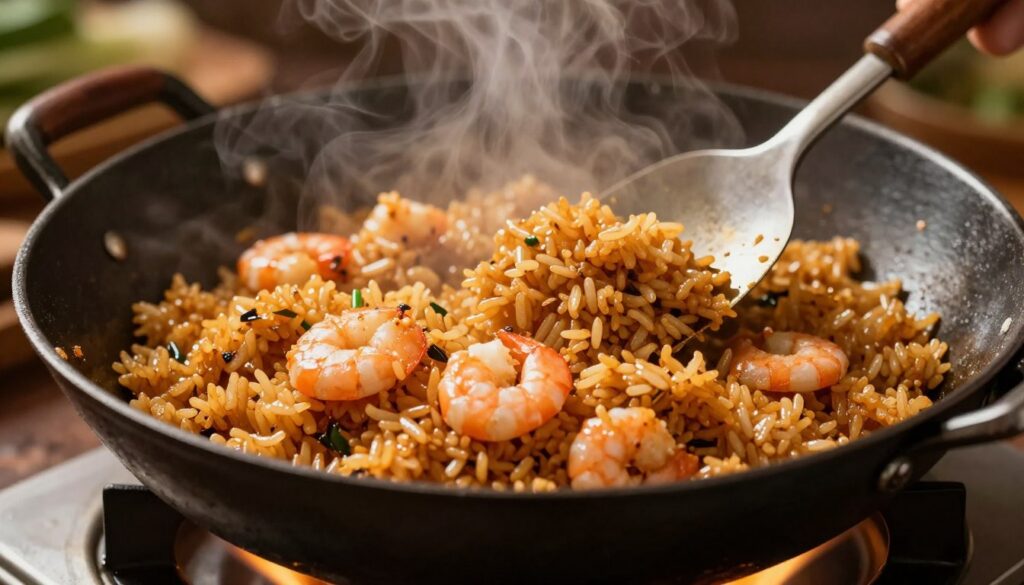
Heat is key to making great shrimp fried rice. Restaurants use very high heat in woks to fry rice grains quickly. This method gives the rice a toasted flavor and keeps it fluffy and separate.
To do this at home, follow these steps:
- Use a large skillet or wok for even heat distribution
- Heat your pan over medium-high to high heat for at least 2-3 minutes
- Wait until the pan is smoking slightly before adding oil
- Maintain high heat throughout the cooking process
If your pan isn’t hot enough, your shrimp fried rice will be mushy and sticky. Your pan must be very hot to fry the rice, not steam it.
The Importance of Prepping Everything First
The secret to the best shrimp fried rice is preparation before you start cooking. Fried rice cooks fast, usually in 10-15 minutes. So, have everything ready before you start.
Get these items ready in advance:
- Break up your cold rice into individual grains
- Clean and pat dry your shrimp completely
- Beat your eggs in a bowl
- Measure out all seasonings and sauces
- Gather garlic, oils, and any other ingredients
This method, called mise en place, helps you cook quickly and confidently. It ensures your shrimp fried rice turns out perfectly, just like in your favorite restaurant.
Common Mistakes to Avoid When Making Shrimp Fried Rice
Learning shrimp fried rice tips helps you avoid mistakes that make your dish mushy. Many home cooks face seven common mistakes that ruin the dish’s texture. Knowing what to avoid is key to success in the kitchen.
The biggest mistake is using freshly cooked rice. It’s too moist and steams instead of frying, making it sticky. Day-old rice is best because it’s dry and fries well. Always use cold rice that’s broken up before cooking.
Here are the key mistakes to watch out for when making easy fried rice with shrimp:
- Starting with a cold pan—your pan must be hot enough to fry, not steam the rice
- Overcrowding your skillet—give ingredients room to move and make contact with the hot surface
- Overcooking shrimp—they only need 2-3 minutes per side before turning pink and curling
- Skipping prep work—have everything ready because cooking moves fast once you start
- Adding too much soy sauce—this makes your dish salty and soggy instead of fluffy
Shrimp cook fast, so watch for the pink color and curl shape. Rubbery shrimp mean they’ve been in the pan too long. For easy fried rice with shrimp, use high heat and quick movement to prevent steaming.
“The difference between mushy fried rice and perfect fried rice often comes down to one thing: preparation and attention to detail.”
Breaking up cold rice clumps before adding them to your hot pan ensures even cooking. Never skip your prep stage. Gather your soy sauce, oil, shrimp, and rice near your stove for quick access.
Seasoning and Flavor Variations for Your Fried Rice
The right seasonings can turn shrimp fried rice into a dish you’ll love. Adding layers of flavor makes it rich and complex. Knowing how each ingredient works helps you get the taste just right.
Creating Layers of Umami Flavor
Umami is the savory fifth taste that makes food rich and satisfying. Your shrimp fried rice without veggies needs several umami sources to taste great.
Begin with light soy sauce for a salty base. Then, add chicken stock powder or bouillon cubes for extra depth. These often have MSG, the secret to that addictive takeout taste.
A little sugar balances the flavors. It also brings out the sweetness in your shrimp. Lastly, add a bit of sesame oil for that authentic fried rice smell and taste. But use it sparingly because it’s strong.
Optional Add-Ins for Extra Flavor
Make your shrimp fried rice without veggies your own with these ideas:
- Minced garlic and fresh grated ginger for a deep aroma
- Oyster sauce for sweeter, deeper umami
- Chili crisp, sriracha, or red pepper flakes for heat
- Green onions or scallions for freshness and color
- Sesame seeds for texture and look
- Chili oil for spice and complex flavor
Salt and white pepper complete your seasoning. White pepper adds a subtle heat without the black specks. Mix these options to make your shrimp fried rice without veggies unique.
How to Store and Reheat Leftover Shrimp Fried Rice
Your homemade shrimp fried rice is best when it’s fresh. The rice stays fluffy, and the shrimp are tender. If you have leftovers, storing them right keeps your dish tasty for days.
Reheating shrimp can be tricky because it can get tough and dry. But, with the right steps, your homemade shrimp fried rice can stay delicious.
Refrigeration and Reheating Your Fried Rice
Put your leftover shrimp fried rice in an airtight container in the fridge. It stays fresh for three to five days this way.
To reheat, use a skillet instead of the microwave. A skillet helps keep the shrimp tender.
- Heat a lightly oiled skillet over medium heat
- Add your leftover fried rice to the pan
- Splash in a little water or soy sauce to add moisture
- Stir constantly until heated through
- Avoid overheating, which toughens the shrimp
Some people like eating cold homemade shrimp fried rice as a quick lunch.
Freezing for Long-Term Storage
Your shrimp fried rice can be frozen for three to four months. Cool it down first to prevent ice crystals.
- Place cooled fried rice in a freezer-safe container or bag
- Label with the date for easy tracking
- Thaw overnight in your refrigerator before reheating
- Reheat using the skillet method described above
Storing and reheating your shrimp fried rice right keeps it delicious. It also helps reduce kitchen waste.
Serving Suggestions and What to Pair With Your Dish
Your simple shrimp fried rice can look and taste like a restaurant dish. Add finishing touches and pair it with the right sides. This makes your meal special and complete.
Start with simple garnishes that taste great and look good. These small touches can make a big difference in your meal’s presentation and flavor.
Presentation Tips for Restaurant-Style Plating
Professional plating makes your homemade shrimp fried rice look like it’s from a restaurant. Here’s a classic technique to create a stunning dome shape:
- Arrange your shrimp at the bottom of a rice bowl
- Pack your fried rice firmly on top of the shrimp
- Press down with the back of a spoon to compact everything
- Carefully flip the bowl onto your serving plate
- Gently lift away the bowl to reveal the dome
- Sliced green onions for fresh color and bite
- Toasted sesame seeds for nutty crunch
- Drizzle of chili oil for heat and richness
- Sprinkle of crispy garlic for extra flavor
Serve condiments like chili crisp, sambal, or sriracha on the side. This lets each person control their own spice level.
Pair your dish with light sides like egg drop soup, hot and sour soup, spring rolls, or steamed edamame. These complement your simple shrimp fried rice without overwhelming the plate.
Conclusion
You now have all the tools to make an easy shrimp fried rice recipe without vegetables. This dish shows that simple meals can be amazing. With day-old rice, quality shrimp, and basic seasonings, you can create something delicious in one pan.
Your kitchen will smell like a restaurant, and cleanup will be quick. The beauty of shrimp fried rice no vegetables is its speed and flexibility. You can make it in under 20 minutes on busy weeknights.
This recipe works with what you have, so you don’t need fancy equipment or hard-to-find ingredients. You control the salt, oil, and ingredient quality. This means your homemade version beats takeout every time. Your family will love the taste and freshness.
Start making this easy shrimp fried rice recipe today. Watch your leftover rice turn into restaurant-quality dinners. You’ve learned how to choose the right rice and shrimp, cook with proper heat, and avoid common mistakes.
You understand flavor layering and have ideas for personal touches. Once you taste shrimp fried rice no vegetables from your kitchen, ordering takeout will seem like a waste. Get cooking and enjoy the satisfaction of creating something delicious yourself. You’ve got this.
Explore more delicious meals in our shrimp category.