Recipe for Shrimp and Grits with Cheese (Creamy & Delicious)
Sitting down to a bowl of creamy, cheesy shrimp and grits is deeply satisfying. It captures the soul of Southern coastal cuisine. This dish carries stories from generations of cooks who knew that simple ingredients, when treated with respect and care, become something truly special. You’re not just making breakfast or dinner—you’re creating a connection to a rich culinary tradition that speaks to comfort, warmth, and genuine flavor.
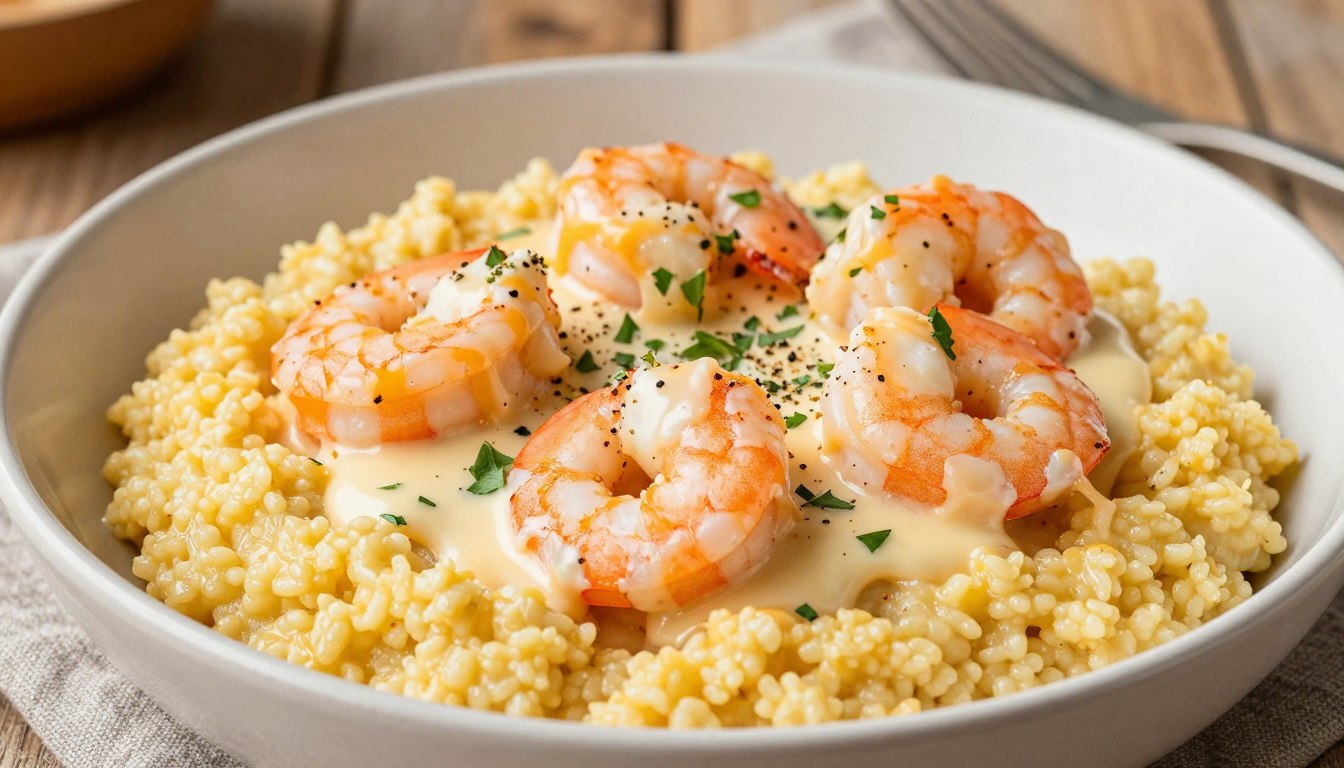
This recipe for shrimp and grits with cheese stands apart from typical versions you might find elsewhere. What you’ll discover is that this isn’t just sautéed shrimp piled on top of grits. Instead, it’s a carefully crafted dish featuring stone-ground grits cooked to silky perfection with sharp cheddar cheese. The shrimp sits in an aromatic gravy alongside savory andouille sausage. Every element plays a role in creating something remarkable.
You’ll learn that this versatile dish works equally well for a cozy weekend breakfast, an impressive brunch, or a satisfying weeknight dinner. The key to restaurant-quality results lies in the low-and-slow cooking method for the grits. Proper technique for tender, never rubbery shrimp makes all the difference. A rich, flavorful gravy built on the foundation of bell peppers, onions, and celery—the holy trinity of Lowcountry cooking—brings everything together.
The process takes time, but it’s straightforward. You won’t need special skills or hard-to-find ingredients. What you will get is a beloved staple that’s earned its place across the American South and beyond. By the end of this guide, you’ll have the knowledge to make Gulf Coast shrimp taste like it came from a Charleston kitchen.
Key Takeaways
- Stone-ground grits cooked low and slow create the perfect creamy base for this beloved Southern dish
- Sharp cheddar cheese combined with other quality cheeses delivers rich flavor that elevates the entire plate
- Gulf Coast shrimp require proper sautéing technique to stay tender and avoid becoming rubbery
- Andouille sausage and the holy trinity of bell peppers, onions, and celery build a savory gravy that ties everything together
- This versatile recipe works for breakfast, brunch, or dinner and produces restaurant-quality results at home
- The careful balance of each component creates a dish that captures the soul of Lowcountry cooking
The Rich History and Cultural Significance of Lowcountry Shrimp and Grits
Shrimp and grits is a favorite in American Southern cuisine. It’s a creamy, comforting dish with deep roots in the Low Country. Knowing its history makes every bite special. It connects us to centuries of coastal heritage and cultural pride.
The Low Country includes parts of South Carolina and Georgia. This area’s foodways mix African, European, and Native American traditions. Serving shrimp and grits at your table shares this rich cultural heritage with loved ones.
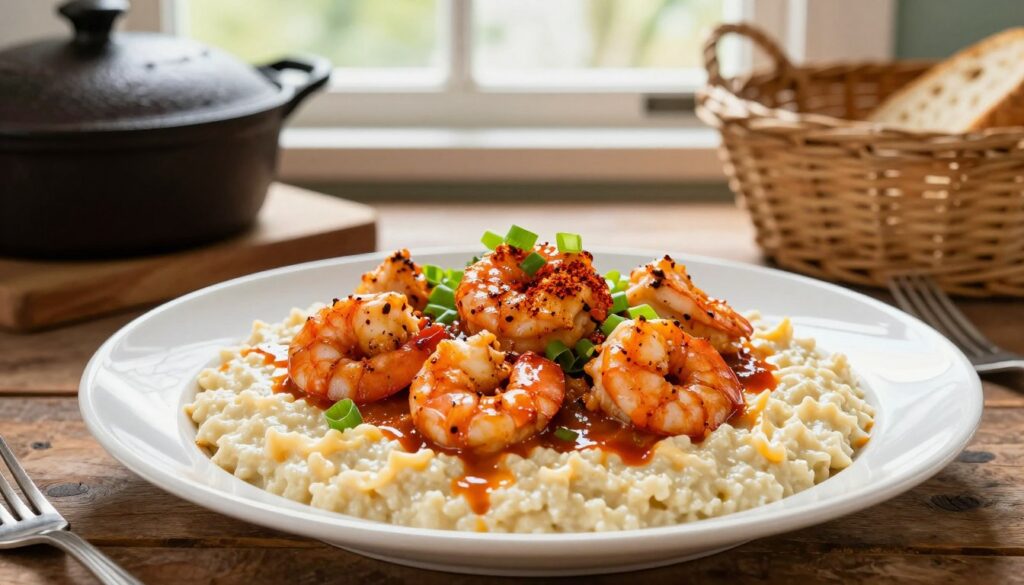
Origins in Gullah-Geechee Culture
The Gullah-Geechee people laid the groundwork for Low Country cooking. They were descendants of West African slaves living on South Carolina and Georgia’s sea islands. Grits, a staple from Native American traditions, was ground from corn.
Gullah-Geechee cooks mixed these traditions in creative ways. Shrimp was common in local waters, making it a cheap protein for meals. The combination of creamy grits with fresh shrimp became a practical dish that stretched ingredients and fed families well. This resourceful cooking turned into something truly special.
- Grits originated from Native American cornmeal traditions
- Shrimp came from abundant local waters
- African cooking techniques shaped flavor profiles
- Limited ingredients created maximum flavor
How This Dish Became a Southern Staple
Shrimp and grits spread beyond Low Country kitchens. In the 1980s and 1990s, Charleston restaurants put it on fine dining menus. Chefs added cheese, bacon, and refined sauces while keeping its cultural roots.
Now, shrimp and grits represents Southern comfort food nationwide. You’ll find it on menus from coastal towns to inland cities. It honors its Gullah-Geechee heritage while adapting to modern tastes and cooking styles. This shows how traditional foods gain new appreciation across generations and regions.
When you make shrimp and grits at home, you’re carrying on a tradition that spans hundreds of years. You’re connecting your table to the waters, people, and cultures that made this dish what it is today.
Essential Ingredients for Perfect Cheesy Shrimp and Grits
Creating a memorable shrimp and grits dish starts with the right ingredients. Each part is crucial for the creamy cheese grits and savory shrimp gravy. These elements make this Lowcountry classic so loved.
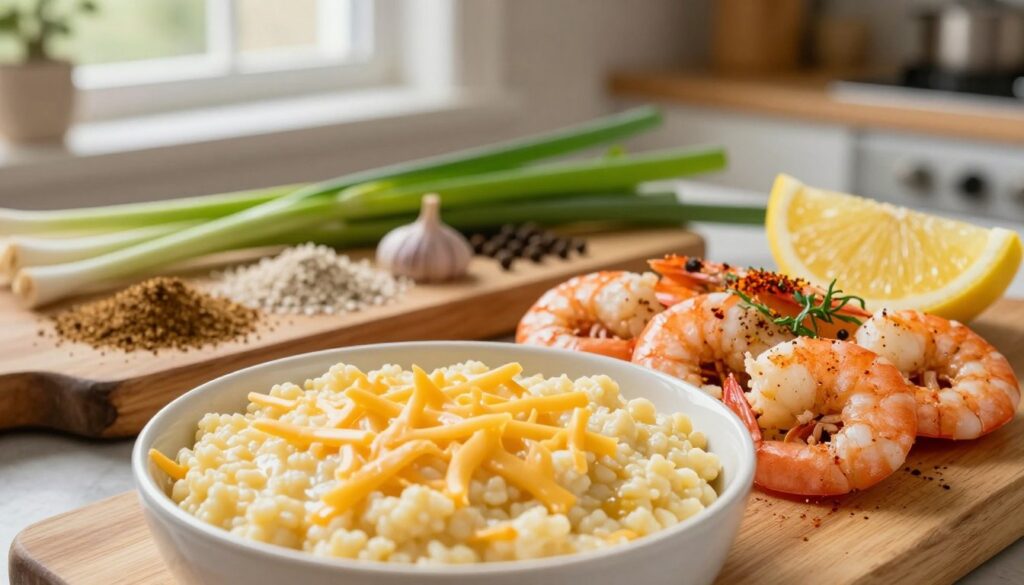
The dish begins with grits—specifically regular grits, not instant. Regular grits cook slower but are creamier. You mix them with water and chicken broth for flavor. The chicken broth adds depth that plain water can’t.
Butter makes the mixture richer, and half and half adds smoothness. Sharp cheddar cheese gives the dish its tangy flavor.
Your Grits Base Ingredients
- Regular grits (not instant varieties)
- Water and chicken broth combined
- Salt for seasoning
- Butter for richness
- Half and half for creaminess
- Sharp cheddar cheese as your main cheese
- White pepper for subtle heat
You can also try other cheeses. Pepper jack adds heat, gouda smokiness, and mascarpone silkiness. Colby jack or monterey jack offer milder flavors. Yellow cheddar is another great choice.
Your Shrimp Gravy Ingredients
Gulf Coast shrimp are the best choice for the gravy. They are larger, meatier, and more flavorful. Creole or Cajun seasoning gives the dish its spice. White pepper adds sophistication without too much heat.
- Gulf Coast shrimp (preferably fresh)
- Creole or Cajun seasoning
- White pepper
- Andouille sausage for smoky, spicy notes
- Bacon (as an alternative or addition to andouille)
- Bell pepper, onion, and celery (the aromatic trio)
- Fresh garlic for pungency
- Flour for thickening
- Chicken broth for liquid base
- Heavy cream for luxurious body
- Fresh parsley for bright finishing touch
Knowing how each ingredient helps you make better choices at the store. Bell pepper, onion, and celery create the base flavor. Garlic adds a pungent taste. Andouille sausage or bacon add smoky heat.
Flour thickens the gravy, and heavy cream adds luxury. Fresh parsley adds brightness and looks great.
Choosing the Right Grits for Maximum Creaminess
The type of grits you pick is key to a great shrimp and grits dish. Not all grits are the same. Your choice affects the dish’s texture and taste. Knowing these differences helps you achieve the creamy, tasty results you desire.
Grits are made from dried and ground corn kernels. The size of the grind and how they’re processed change cooking time and texture. Choosing the right grits means better creaminess and a richer corn flavor in every bite.
Stone-Ground vs. Quick-Cooking Grits
Stone-ground grits have big advantages over quick-cooking ones. They’re ground with traditional stone mills, keeping the corn’s natural oils and nutrients. They take longer to cook, but offer better flavor and texture.
Quick-cooking grits are finely ground and pre-processed for fast cooking. They’re convenient but often taste less rich and can become sticky. For authentic shrimp and grits, stone-ground grits are the better choice.
Why Regular Grits Beat Instant Every Time
Instant grits are heavily processed and cook quickly. They lose flavor and creaminess for speed. Regular grits, whether stone-ground or quick-cooking, keep more texture and taste.
- Regular grits absorb liquid more gradually
- They develop richer corn flavor during cooking
- They create naturally creamy consistency without lumps
- Instant varieties often turn mushy or separated
For the best creamy shrimp and grits, choose stone-ground or quality regular grits from brands like Bob’s Red Mill or Anson Mills. Your dish will taste much better.
Recipe for Shrimp and Grits with Cheese
Making shrimp and grits at home needs good prep and quality ingredients. This dish has two parts: creamy cheese grits and savory shrimp gravy. Start by getting all your ingredients ready before cooking.
Start with your cheese grits. Mix 3½ cups water, 1 cup chicken broth, and salt. Then, slowly add 1 cup grits to avoid lumps. Cook until creamy, then add 2 tablespoons butter, ⅓ cup half and half, and ½-1 cup sharp cheddar cheese. Finish with ¼ teaspoon white pepper.
The shrimp adds flavor and protein. You’ll need 1 lb shrimp, peeled and deveined, for four people. Season with 1 tablespoon Creole seasoning and ¼ teaspoon white pepper before cooking.
- 4 tablespoons butter (divided between sausage and shrimp)
- 6 oz andouille sausage, sliced
- ½ green bell pepper (diced)
- ½ small onion (diced)
- 1 stalk celery (diced)
- 6 cloves garlic, minced
- 2 tablespoons flour for thickening
- 1¼ cup chicken broth for the gravy
- ¼ cup heavy cream
- 1 tablespoon fresh parsley for garnish
Want to customize your dish? Try these variations for different tastes. Use bacon for a smokier flavor. Add diced jalapeño for heat. Mix pepper jack and cheddar cheese with mascarpone for creamier grits. Use 6 cups half and half with 1½ cups quick grits for silkier texture. A splash of hot sauce and lemon juice brighten the gravy.
The secret to restaurant-quality shrimp and grits is timing and quality ingredients. Don’t rush the grits, and don’t overcook the shrimp.
This recipe gives you exact measurements and clear instructions for making restaurant-quality shrimp and grits at home.
Making the Creamiest Cheese Grits You’ll Ever Taste
The secret to creamy cheese grits is in how you cook and what you use. It’s all about getting the right texture. You want a smooth, velvety base that’s perfect for shrimp and gravy.
Turning simple grits into a fancy side dish is all about technique. You need to know how heat and timing work together. This guide will show you how to avoid grainy grits and achieve creamy perfection.
The Low and Slow Cooking Method
When making creamy grits, patience is key. Cooking at low heat helps avoid lumps and lets starches cook slowly. Stir constantly at first, then regularly as you cook.
Here’s how to cook:
- Bring water or broth to a gentle boil
- Slowly whisk in stone-ground grits while stirring
- Reduce heat to low immediately
- Stir every 2-3 minutes for 30-40 minutes
- Add butter and cheese during the final 5 minutes
This slow cooking method prevents burning and gives you that silky texture. Don’t rush it. The effort is worth it for better results than quick methods.
Best Cheese Combinations for Rich Flavor
Choosing the right cheese is crucial for flavor. Using just one type of cheese is boring. Mix different cheeses for a richer taste.
Here are some great cheese mixes:
- Sharp cheddar with Gruyère for bold, nutty notes
- Fontina with Parmesan for creamy umami
- Smoked cheddar with white cheddar for depth
Use about one cup of mixed cheese for every four servings. Add cheese slowly at the end. This keeps the grits smooth and prevents them from becoming grainy. Your dish will be rich and delicious.
Creating the Perfect Lowcountry Shrimp Gravy
The gravy is the heart of your shrimp and grits dish. It’s a rich, flavorful sauce that ties everything together. Getting it just right takes practice, but it’s easy to follow the steps.
Begin by cooking bacon in your skillet. Use thick-cut bacon and cook until crispy. This step is key for your gravy. Once crispy, remove the bacon and set it aside on a paper towel.
Then, cook your vegetables in the bacon fat. The bacon drippings add amazing flavor. Add diced onions and minced garlic to the hot fat. Cook until they’re soft and fragrant, about three to four minutes.
Next, deglaze with wine or broth. Pour in a cup of white wine or chicken broth. Scrape the bottom of your skillet with a wooden spoon. This brings all the flavorful brown bits into your gravy.
Building Layers of Flavor
Your gravy needs depth and brightness. Add lemon juice and worcestershire sauce for balance. Use two tablespoons of fresh lemon juice and one tablespoon of worcestershire sauce. These ingredients cut through the richness and add complexity.
To thicken your gravy, use Wondra flour. This flour dissolves smoothly without lumps. Sprinkle two tablespoons over the liquid while whisking constantly. Cook for two minutes until the gravy is silky and coats the back of a spoon.
- Cook bacon first for maximum flavor
- Use rendered fat for cooking aromatics
- Deglaze with wine/broth mixture for depth
- Add lemon juice and worcestershire sauce for brightness
- Thicken with Wondra flour for perfect texture
Taste your gravy before serving and adjust seasonings as needed. Crumble your reserved bacon back into the sauce. Pour it over your creamy cheese grits and perfectly cooked shrimp.
Expert Tips for Cooking Shrimp Without Overcooking
Cooking shrimp perfectly takes practice and attention to detail. The difference between tender, juicy shrimp and rubbery, tough shrimp happens in just seconds. You need to understand the exact timing and visual signals that tell you when your shrimp are done. This section teaches you how to avoid overcooking and create restaurant-quality results in your own kitchen.
Selecting Gulf Coast Shrimp for Best Results
The quality of your shrimp matters just as much as how you cook them. Gulf Coast shrimp offer the best flavor and texture for your Lowcountry dish. Look for shrimp that are firm, with a fresh ocean smell and no black spots on the shell. Fresh or frozen Gulf shrimp work equally well, so choose based on what’s available at your local seafood market.
Buy shrimp that are roughly the same size. This ensures they cook evenly and prevents some pieces from becoming overdone while others remain undercooked. Large shrimp work best for this dish because they hold up better during cooking.
Proper Sautéing Techniques
Master the art of sautéing to keep your shrimp tender. Watch shrimp constantly during cooking, as they can go from perfectly done to rubbery in mere seconds. The key is knowing exactly when to pull them from the heat.
- Arrange shrimp in a single layer in your skillet so each piece makes direct contact with the hot surface for proper searing
- Cook 1-2 minutes per side for large shrimp, depending on exact size
- Look for a uniform pink or opaque color throughout as your visual cue
- Stop cooking when the flesh turns from translucent to opaque
Here’s the critical secret: The shrimp will continue cooking from residual heat after you remove them from the pan. They’ll cook further when returned to the hot gravy. Slightly undercooking them during the initial sauté is actually the right approach to avoid overcooking.
Season with a light hand before cooking. Popular Creole seasonings like Tony Chachere’s contain significant salt. Taste your dish before adding more salt to avoid an overly salty result.
Serving Suggestions and Variations for Your Shrimp and Grits
Your shrimp and grits dish is a canvas for creativity. You can make it your own, keeping its classic charm. This dish’s flexibility lets you experiment while staying true to its roots.
Try swapping andouille for bacon for a smokier flavor. Cook the bacon until crispy, then use the fat to cook your shrimp. Add the crispy bacon back in for extra texture and taste.
For those who love spice, add a jalapeño pepper to the sauce. Tomato paste adds depth to the heat. Serve with extra hot sauce for those who want more.
Creative Cheese and Grain Combinations
Your cheese choice is key. Experiment with different cheeses to find your favorite:
- All pepper jack for maximum heat and flavor
- All cheddar for classic richness
- Gouda for a smoky, complex taste
Serve over gouda grits with Cajun spice for a fancy touch. Finish with lemon juice to brighten the flavors. Using bacon drippings instead of butter adds a rich depth.
Accommodating Dietary Needs
Making this dish gluten-free is easy. Just replace flour with gluten-free flour in a 1:1 ratio. This way, everyone can enjoy this Southern classic without worrying about gluten.
Conclusion
You now have all the tools to make authentic shrimp and grits at home. Patience with the low-and-slow grits cooking method makes them incredibly creamy. This dedication rewards you with rich, velvety grits that are perfect for your meal.
Proper shrimp handling ensures they are tender and never rubbery. This keeps your guests coming back for more. Building the gravy with aromatic vegetables and quality ingredients adds layers of complex flavor. This makes the dish truly special.
Each bowl of shrimp and grits connects you to the rich culinary heritage of the Gullah-Geechee people. This heritage comes from the coastal regions where this dish originated. By preparing it yourself, you embrace this heritage and tradition.
This recipe is versatile for any occasion in your home. It’s great for special brunches, comforting weeknight dinners, or Mardi Gras celebrations. The steps may seem many, but they’re not hard once you practice them. Your process becomes intuitive with time.
Feel free to experiment with different cheeses, swap andouille for bacon, or adjust the heat level to match your taste. Share this soul-satisfying dish with your family and friends to create new traditions. Embrace the cozy, comforting nature of shrimp and grits and enjoy knowing that every bite truly is better than the last. Start cooking this delicious taste of the South today and discover why this classic has remained a beloved favorite for generations.
Explore more delicious meals in our shrimp category.