Delicious Japanese Beef Curry Recipe with Golden Curry Sauce
A steaming bowl of Japanese beef curry is deeply comforting. The aroma reminds us of cozy family dinners. It’s mild, sweet, and rich, with a velvety sauce that clings to tender beef and soft vegetables.
About 150 years ago, the British Royal Navy introduced Indian-style curry to Japan. The Japanese softened the heat, added sweetness, and created a thick gravy. Today, homemade Japanese beef curry recipe with golden curry is a national dish, loved by all.
Using S&B Golden Curry roux is the secret to making restaurant-quality Japanese curry at home. This trusted brand simplifies balancing spices and flavors. With quality beef, fresh vegetables, and proper cooking, S&B Golden Curry turns simple ingredients into something special.
This article will guide you through making Japanese beef curry with golden curry at home. You’ll learn which beef cuts to use, how to build deep umami flavors, and how to customize the dish. Plus, this hearty curry is even better the next day, perfect for meal prep and family meals.
Key Takeaways
- Japanese beef curry with golden curry sauce is a mild, sweet comfort food adapted from Indian curry over 150 years ago
- S&B Golden Curry roux simplifies the cooking process while delivering authentic, restaurant-quality results at home
- Beef chuck roast is the best meat choice because it becomes incredibly tender and absorbs the rich curry flavors
- Caramelizing onions and searing beef before adding the roux builds deep, complex umami tastes
- This homemade Japanese curry tastes even better as leftovers, making it perfect for batch cooking and family meals
- You can easily customize your curry with different vegetables and adjust spice levels to suit your preferences
- Serving your curry over steamed Japanese rice with traditional side dishes creates an authentic dining experience
What Makes Japanese Beef Curry a Beloved Comfort Food
Japanese beef curry is loved worldwide. It’s more than food; it’s warmth, tradition, and flavors that comfort us. Its story and the bond it forms with families make it special.
The History of Japanese Curry Rice
Curry rice started when British sailors brought it to Japan during the Meiji Restoration. Japanese cooks made it their own, creating a sweeter, thicker version. This suited their taste perfectly.
By the early 1900s, curry rice was everywhere. You could find it in restaurants, schools, and homes. It was a favorite in school lunches, served every Tuesday. This introduced curry to many children.
Why Families Love This Hearty Dish
Families love Japanese beef curry for many reasons:
- It’s like a warm hug on cold nights with its chunky texture and velvety sauce
- It’s loved by both kids and adults, making dinner easy
- Beef stew-style ingredients keep you full for hours
- It’s affordable, fitting most family budgets
- Flavors get better overnight, making it a great meal to cook once and enjoy twice
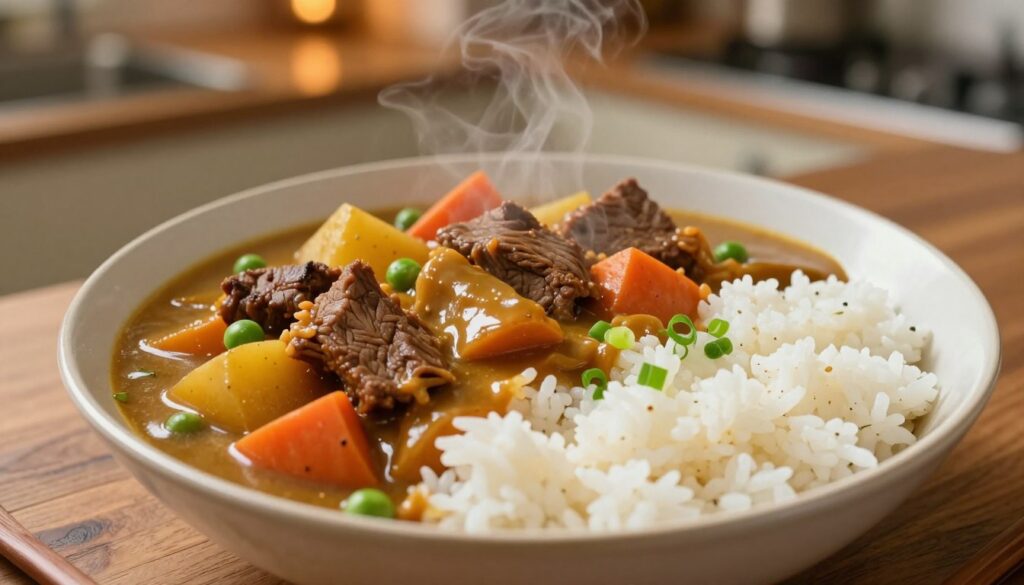
Curry rice combines tender meat, soft vegetables, and rich sauce into one satisfying bowl. It’s perfect for busy families looking for tasty, affordable meals. Its simple preparation means more time to enjoy meals together.
Essential Ingredients for Authentic Japanese Beef Curry Recipe with Golden Curry
To make a real Japanese beef curry, you need the right ingredients. The main ingredient is Japanese curry roux, sold as curry blocks. These blocks are easy to use and come from brands like S&B Golden Curry and Vermont curry. They have a mix of spices, flour, and oil that makes your sauce.
Knowing what you need helps make your curry taste just right. Here’s what you’ll need:
- Beef chuck roast (2-3 pounds, cut into chunks)
- Onions (3 medium, diced)
- Potatoes (Russet or Yukon gold, cubed)
- Carrots (sliced into rounds)
- Cremini mushrooms (halved for umami depth)
- Garlic (3 cloves, minced)
- Fresh ginger (1 tablespoon, grated)
- Japanese curry roux or curry blocks (8-10 ounces)
- S&B curry powder (1 tablespoon for layering flavor)
- Vermont curry or S&B Golden Curry blocks
- Beef stock (4 cups)
- Red wine (1 cup for deglazing)
- Apple (1, grated for natural sweetness)
- Worcestershire sauce (2 tablespoons)
- Milk (½ cup for creaminess)
- Bay leaf (1)
Curry blocks come in different heat levels. You can pick one that suits your taste. Mixing different brands, like S&B curry powder with Vermont curry blocks, adds depth to your curry.
Vegetables play important roles. Onions add sweetness when caramelized. Potatoes make the dish hearty. Carrots add color and nutrients. Mushrooms bring a rich umami flavor. The grated apple adds a touch of sweetness, while Worcestershire sauce and red wine add savory notes.
Prepping all your ingredients before cooking makes the process easier. Using genuine Japanese curry roux makes your curry taste authentic, unlike Indian or Thai varieties.
Choosing the Best Cut of Beef for Tender, Flavorful Curry
The type of beef you pick is key to a great tender beef curry. The right cut turns into tender pieces that soak up the curry sauce well. Your choice can make or break your dish.
Why Beef Chuck Roast Works Best
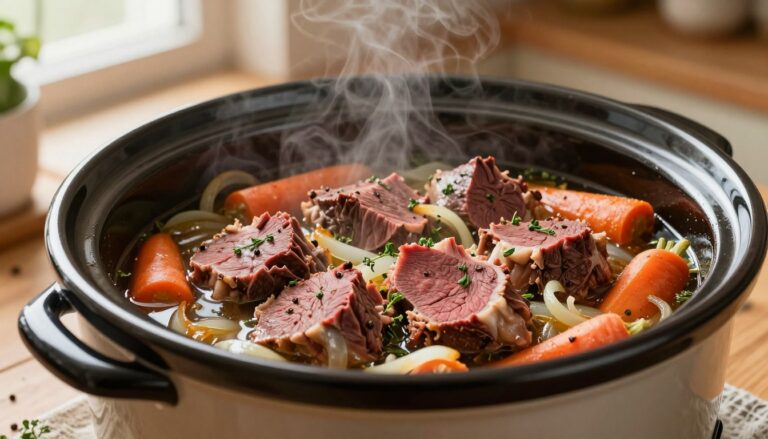
Beef chuck roast comes from the cow’s shoulder muscles. It has lots of connective tissue and marbling. When cooked low and slow, these break down, making the meat tender and flavorful.
Stew beef from the store can be a problem. It’s made from leftover scraps and cooks unevenly. This can make some pieces tough and chewy, ruining your dish.
If beef chuck roast is hard to find, try these alternatives:
- Beef shank for deep, rich flavor
- Round roast as a leaner option
- Rump roast for consistent results
- Pot roast for similar cooking qualities
How to Properly Prepare and Season Your Meat
Start by cutting your beef chuck roast into 1.5-inch cubes. This size helps the meat stay together during cooking. Look for meat with even fat marbling and trim any big fat chunks.
Season your meat right with these steps:
- Sprinkle salt and pepper on all sides
- Let it rest for several hours or overnight in the fridge
- Lightly coat each cube with flour before searing
- This flour coating creates a brown crust and helps thicken your curry sauce naturally
Spending time on these steps ensures your tender beef curry is the best it can be.
Step-by-Step Instructions for Making Japanese Beef Curry
Making Japanese beef curry at home is easier than you think. It takes patience and detail, but it’s worth it. Follow these steps to make a delicious golden curry sauce that will wow your family.
Building Your Flavor Foundation
Begin by slicing two large onions thinly. Caramelize them in butter and oil over medium heat for 20-25 minutes. This step is key for a sweet, deep flavor base.
While the onions cook, prepare your vegetables. Cut mushrooms, carrots, and potatoes into bite-sized pieces. Soak the potatoes in water for at least 15 minutes. This helps them cook better and not fall apart.
Searing and Building Layers
Cut your beef chuck roast into cubes and season with salt and pepper. Coat the meat lightly with flour. Sear the beef in batches over medium-high heat, ensuring not to overcrowd the pan.
This step creates a brown, crusty exterior that locks in flavor. After browning, deglaze the pan with red wine. This captures the flavorful browned bits.
Combining Ingredients and Simmering
Add garlic, ginger, curry powder, and tomato paste to your sauce base. Stir in the seared beef and deglazed liquid. Include carrots, mushrooms, beef stock, apple, Worcestershire sauce, milk, and a bay leaf.
Simmer this mixture on low heat for about 1 hour and 45 minutes. This makes the beef tender.
- Add potatoes during the final 15 minutes of simmering
- Turn off heat completely before adding curry roux
- Dissolve the curry roux thoroughly by stirring constantly
- Simmer on the lowest heat setting for 3-5 minutes to thicken
Serve your finished curry sauce over steamed rice. Enjoy your homemade Japanese beef curry.
The Secret to Deep, Rich Curry Flavor
What makes a Japanese beef curry stand out? It’s all about two key cooking techniques. These methods add layers of flavor that make your curry unforgettable. Learning these steps will elevate your cooking and wow your guests.
Caramelizing Onions for Maximum Sweetness
Caramelizing onions brings out their natural sweetness. This process creates complex flavors that are the heart of your curry sauce. It may take time, but the outcome is well worth it.
Here’s what happens when you cook onions slowly over medium-low heat for 20-25 minutes:
- Natural sugars transform into deep, caramel notes
- Sharp, pungent flavors become mellow and sweet
- Onions reduce in volume and turn golden brown
- Nutty undertones develop for added depth
You’ll know your onions are ready when they’re soft, golden, and have halved in size. While caramelizing onions requires focus, you can prep other ingredients in the meantime.
Searing Meat to Build Umami
To sear beef right, heat your pan until it’s very hot. Cook in batches to prevent overcrowding, which hinders browning. Let each piece sit undisturbed for 2-3 minutes to get a flavorful crust.
When you sear beef at high heat, the Maillard reaction creates amazing savory flavors. The browned bits, called fond, stick to your pan and hold concentrated umami. This umami enriches your entire curry sauce.
Follow these steps for best results:
- Heat your pan until nearly smoking
- Pat beef dry before searing
- Sear in batches without moving the meat
- Deglaze the pan to capture all fond
To take your curry to the next level, stir in 2-3 cloves of minced garlic after adding curry roux. This adds a bright garlic punch that enhances the whole dish.
Customizing Your Curry with Vegetables and Spice Levels
Japanese curry is very flexible. You can make it fit your taste and dietary needs. Making curry at home lets you control everything, from how spicy it is to what ingredients you use. This guide will help you make your Japanese beef curry just right for your family.
Choosing the spice level is easy. Japanese curry roux comes in different heat levels. For a milder curry, use the mild version. If you like it spicy, go for the spicy one. You can mix both for a perfect balance. Most stores have many brands to choose from.
What vegetables you choose greatly affects the taste and texture. While potatoes, carrots, and onions are classic, you can try other options. Here are a few ideas:
- Yukon gold potatoes stay firm during cooking
- Russet potatoes make the curry fluffier
- Japanese eggplant is tender and mild
- Kabocha squash adds sweetness
- Green beans and peas add color and freshness
- Bell peppers add a crunchy texture
- Mushrooms like shimeji or king oyster add earthiness
You can also use chicken thighs, pork belly, or seafood like shrimp instead of beef. Each needs different cooking times, so adjust as needed.
For vegetarian options, use firm tofu or a mix of vegetables. Adding honey, butter, soy sauce, or ketchup can enhance the flavor.
Serving Suggestions and Perfect Side Dishes
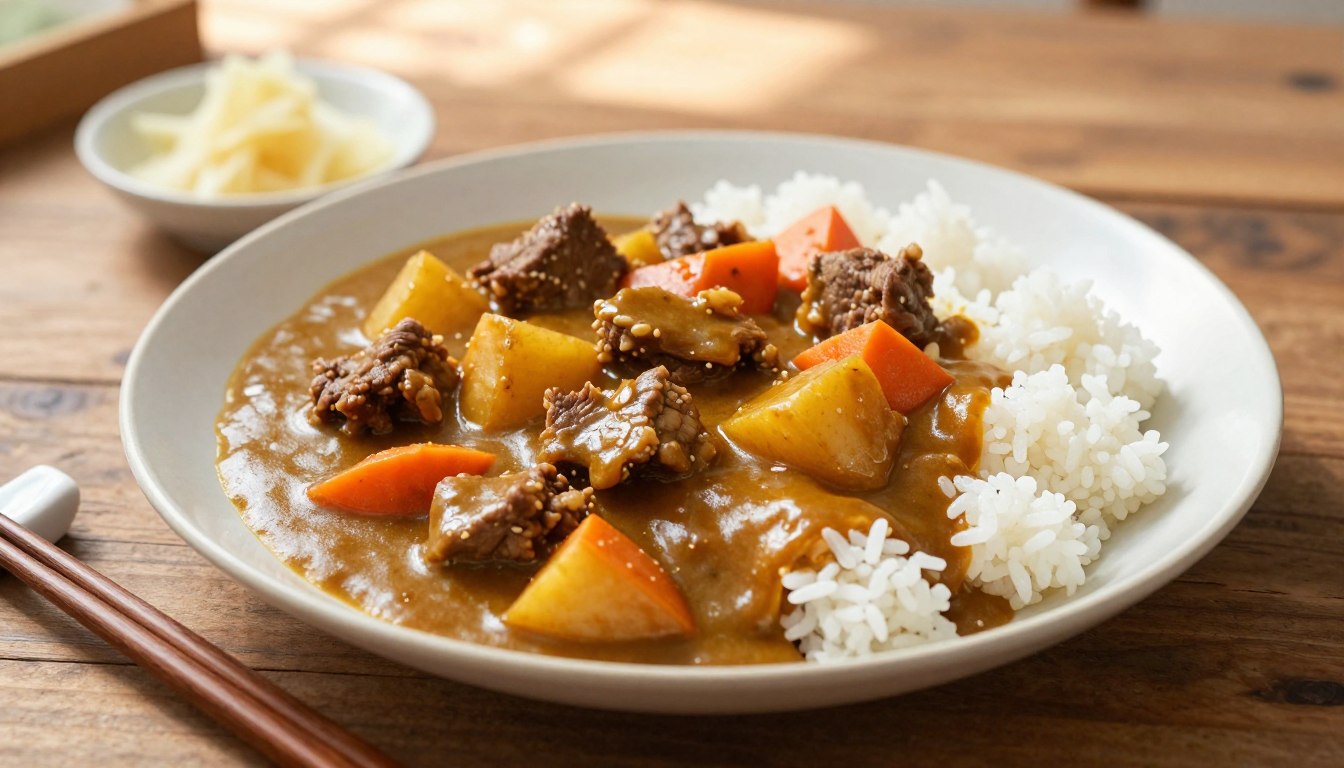
Serving your Japanese beef curry the right way makes a big difference. The traditional Japanese way of presenting it is both beautiful and fun to eat. Place steamed rice on one half of the plate and the curry sauce on the other. This way, you can mix both flavors in every bite.
Traditional Japanese Accompaniments
Japanese pickles are key to enjoying curry rice. They add a tangy, crunchy touch that balances the curry’s richness. Fukujinzuke, a sweet-tart pickle, is a top pick. It’s made from daikon radish and other veggies, perfect for curry.
Other great choices include:
- Rakkyo (pickled scallions) for a sharp, palate-cleansing effect
- Asian coleslaw with sesame dressing for cool, crisp contrast
- Japanese macaroni salad for creamy, light balance
- Soft-boiled eggs for added protein and richness
Best Rice and Beverage Pairings
Choosing the right rice is important. Short grain rice is the best because it’s sticky and sweet, matching curry perfectly. It’s chewy and holds the sauce well, making it easy to eat.
Mugicha, Japanese barley tea, is the traditional drink to pair with it. It’s caffeine-free and has a roasted flavor that complements the curry. You can enjoy it hot or cold.
Other options include:
- Curry served over udon noodles instead of rice
- Crusty bread for a fusion-style approach
- Sticky rice for added texture and flavor absorption
Storage, Reheating, and Make-Ahead Tips
Japanese beef curry is amazing because it tastes better the next day. It’s perfect for busy weeknights when you don’t want to cook from scratch. The flavors get even better as it sits, making it a great choice for meal prep.
Storing your curry right is key to keeping it fresh. Use airtight glass containers, not plastic, because the sauce can stain it. Your fridge will keep it good for three to five days. Glass containers are better because they protect your food and let you see what you have.
Freezing your curry makes it last longer. You can freeze it for up to a month, which is super handy for batch cooking. But, take out the potato pieces before freezing. They get grainy and ruin the dish’s texture after thawing.
Reheating your curry is easy if you do it right:
- Thaw frozen curry in your fridge for twenty-four hours before reheating
- Add one-half cup of water to loosen the sauce, which thickens as it cools
- Heat gently over low heat on the stovetop, stirring frequently
- Adjust thickness by adding more water if needed or simmering uncovered to reduce
Make-ahead strategies are perfect for this dish. You can make your curry one to two days in advance for parties or busy weeknights. This way, the flavors get even richer before you serve it, impressing everyone.
Conclusion
You now know how to make a tasty homemade Japanese curry that your family will adore. This recipe uses simple ingredients and quality curry roux like S&B Golden Curry or Vermont Curry. It’s a dish that tastes like it took hours to make, but it’s quick to prepare at home.
This family favorite is special because it’s easy to adjust and customize. You can change the spice level and use different vegetables. Plus, it gets better with time, making it perfect for busy families.
The secret to success is in the details. Caramelize onions for sweetness, sear beef chuck roast for flavor, and use authentic curry roux. These steps turn simple ingredients into a dish that fills your kitchen with a wonderful aroma.
Now, it’s time to make this recipe your own. Get your ingredients ready and follow the guide. See why Japanese beef curry is loved by families everywhere. Share this meal with your loved ones and enjoy the comfort of homemade food.
Explore more delicious meals in our beef category.