
Old-Fashioned Vegetable Beef Soup with Cabbage: Easy Recipe
There’s something special about a warm bowl of soup that takes you back to simpler times. An old-fashioned vegetable beef soup with cabbage brings those feelings to your kitchen. This dish has fed families for generations, offering comfort in every spoonful.
You don’t need fancy cooking skills to make a delicious homemade vegetable beef soup. What you need is basic ingredients, a little time, and the desire to create something warm and satisfying. This hearty vegetable soup fills your home with wonderful aromas while you cook.
Your family will love the tender chunks of beef mixed with fresh vegetables and cabbage in a rich broth. This soup works perfectly for busy weeknights or when you want to prepare meals ahead of time. It tastes even better the next day when all the flavors come together.
Key Takeaways
- This old-fashioned vegetable beef soup recipe with cabbage is simple to make with basic ingredients
- Homemade vegetable beef soup provides comfort food that reminds you of family traditions
- A hearty vegetable soup keeps you full and satisfied for hours
- You can cook this soup on the stovetop, slow cooker, or Instant Pot
- This recipe freezes well for easy meal prep throughout the week
- No special cooking experience is needed to create restaurant-quality results at home
Why You’ll Love This Old-Fashioned Vegetable Beef Soup Recipe with Cabbage
This classic comfort food soup is a must-have in your weekly meals. It uses simple ingredients and easy cooking methods to make something truly special. Families have loved this recipe for generations. It’s not just about the taste—it’s about warmth, satisfaction, and the joy of home-cooked meals.
A Comforting Family Favorite
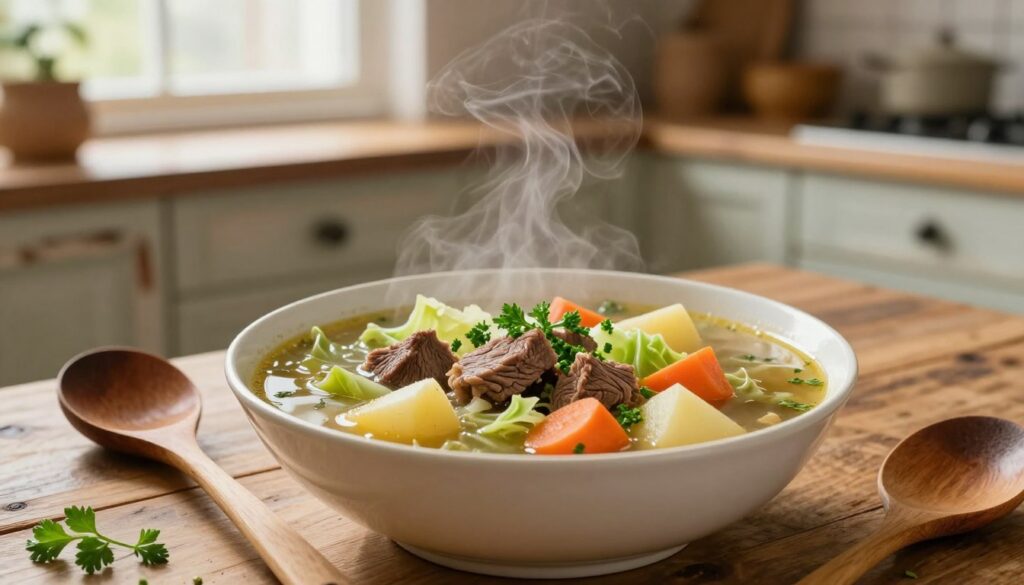
A bowl of this healthy beef soup recipe is truly magical. It reminds us of snow days and family dinners. It’s not fancy or complicated—it’s real comfort food that warms your heart. The beauty is in its simplicity, offering honest flavors without unnecessary complexity.
Packed with Protein and Fiber
Every spoonful of this soup is packed with nutritional benefits. It combines lean beef with cabbage, carrots, and celery for a balanced meal. Each serving has about 34 grams of protein, keeping you full for hours. The vegetables add fiber, supporting your digestion and overall wellness.
- High protein content keeps hunger at bay
- Fiber from vegetables aids digestion
- Low-carb option for clean eating
- Nutrient-dense ingredients throughout
Perfect for Meal Prep and Freezing
This soup makes meal planning easy. You can make a big batch on Sunday and freeze it in individual containers. The flavors get better over time. Reheating is simple, whether on the stovetop or microwave. Many people make a week’s worth, making busy weeknights easier. Your freezer is your secret to stress-free dinners.
Essential Ingredients for Vegetable Beef Soup with Cabbage
Creating a tasty beef and cabbage soup starts with knowing the ingredients. The ingredients you pick will shape the soup’s taste and texture. Most recipes have similar parts, but you can tweak them based on your taste and what you have.
The heart of your easy vegetable beef soup is beef and fresh veggies. Beef is the protein, and veggies add nutrition and flavor. Knowing each part helps you choose the best quality and amount.
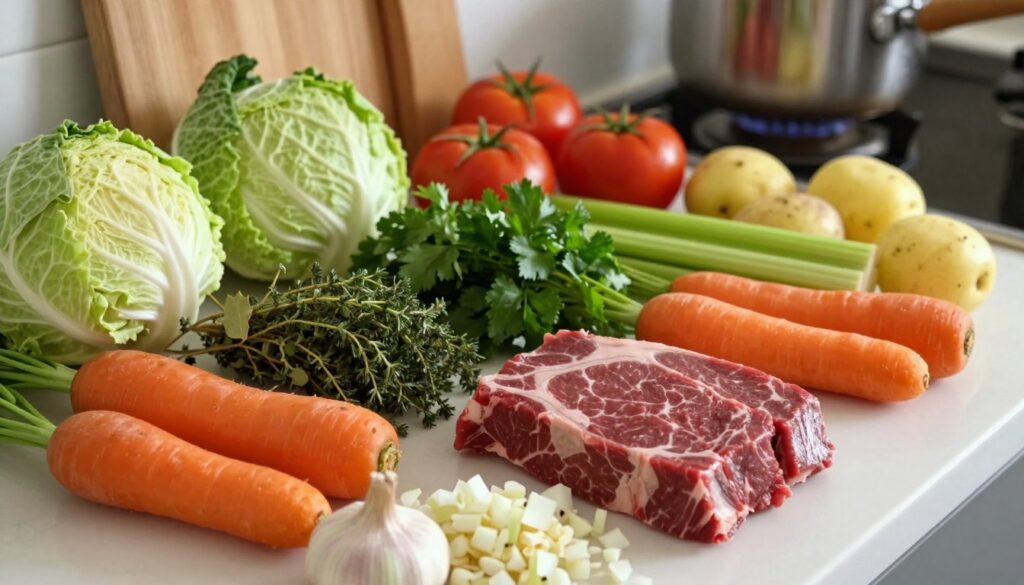
The Core Ingredients You’ll Need
Here are the must-haves for your beef and cabbage soup:
- Beef – Either a 2-pound pot roast or 1-2 pounds of ground beef works well
- Cabbage – About 3-10 cups chopped, depending on your recipe
- Beef broth – 7-8 cups for a rich, savory base
- Onions or leeks – 2 cups for aromatic flavor
- Carrots – 3 cups for natural sweetness
- Celery – 1 cup for depth and texture
- Tomato sauce or tomato soup – 15 ounces adds body and tang
- Garlic – 4 cloves for extra flavor
- Seasonings – Worcestershire sauce, bay leaves, and thyme
Cabbage is the main veggie in this soup. It cooks down, adding sweetness to the broth. You can use fresh or frozen veggies. Fresh ones give great flavor and texture, while frozen save time without losing quality.
Using Better Than Bouillon or quality beef bouillon makes the broth special. These ingredients turn simple broth into something amazing. Your soup ingredients will shine with patience and the right cooking methods.
Choosing the Right Beef for Your Soup
The beef you pick is crucial for a tasty soup. It impacts the soup’s texture and taste. Knowing your options helps you choose the best for your cooking and schedule.
Best Cuts of Beef for Tender Results
Chuck roast is the best for tender beef soup. It has marbleized fat that melts during cooking. This fat keeps the meat moist and tender.
When looking for beef roast soup, consider these cuts:
- Chuck roast
- Shoulder roast
- Pot roast
Opt for a 2 to 2.5 pound piece for a big batch. The white fat streaks ensure success. Lean cuts like sirloin or round roast can be tough and less flavorful.
Ground Beef vs. Beef Roast Options
Ground beef is great for quick vegetable soup. Brown 1 pound of it for 8 to 10 minutes, then drain. Use an 85/15 or 90/10 lean-to-fat ratio for the best taste.
Beef roast takes longer but offers better texture and flavor. Searing the meat first enhances the flavor. It cooks for 1.5 to 2.5 hours until it’s very tender. This method gives a classic, homemade taste.
Your choice depends on your schedule:
- Ground beef: Great for busy weeknights
- Beef roast: Best for weekend cooking
A beef roast soup offers rich, chunky meat. Ground beef versions are quicker but still delicious and homemade.
How to Make Old-Fashioned Vegetable Beef Soup with Cabbage
Making vegetable beef soup is simpler than you might think. This recipe will guide you through each step. You can use beef roast or ground beef to make a soup your family will enjoy.
Begin by preparing your beef. If using a roast, cut it into 2-3 inch chunks. Season it well with salt and pepper. Heat olive oil in a large Dutch oven over medium-high heat.
Brown the beef on all sides in batches. Be careful not to crowd the pan. This step makes the soup rich and flavorful.
Remove the meat from the pot. Add tomato paste and beef broth, scraping up all the brown bits. Return the beef and simmer for 1.5 to 2.5 hours until it’s fork-tender. If using ground beef, brown it with onions for 8-10 minutes, then drain the fat.
Now, prepare your vegetables. Chop cabbage into bite-sized pieces, dice carrots and celery, and mince garlic. Here’s how to cook the vegetables:
- Sauté leeks or onions, celery, and carrots with thyme for 4-5 minutes
- Add minced garlic for the final 30 seconds
- Pour in tomato sauce and beef broth
- Add cabbage and Worcestershire sauce
- Drop in bay leaves and cooked beef
Bring your soup to a boil, then reduce heat to simmer. Cook until the cabbage wilts and becomes tender, about 30-45 minutes. Taste and adjust seasonings as needed. Your homemade beef soup is now ready to serve!
Cooking Methods: Stovetop, Slow Cooker, and Instant Pot
You can make your vegetable beef soup in three ways. Each method suits different schedules and kitchen setups. Choose the one that fits your lifestyle best.
Traditional Stovetop Method
Stovetop beef soup lets you control the cooking. Start by browning the beef in a large pot over medium-high heat. This step adds rich flavors to your soup.
After browning the meat, add broth and water. Simmer for 1.5 to 2.5 hours until the beef is tender. Then, add your veggies and cook for 45 to 60 minutes more.
- Total cooking time: 2 to 3 hours
- Hands-on time: Minimal
- Best for: Monitoring texture and adjusting seasonings throughout cooking
- Ideal when: You’re home and can check on the pot periodically
Slow Cooker Instructions for Busy Weeknights
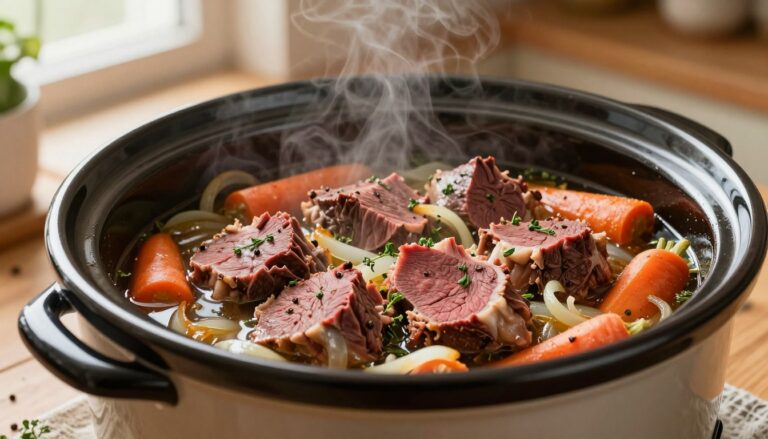
Slow cooker vegetable beef soup is great for busy days. You can use the dump-and-go method or brown the beef first for more flavor.
For dump-and-go, add all ingredients to your slow cooker. Cook on LOW for 6 to 8 hours or on HIGH for 3 to 4 hours. If using a beef roast, shred it and return it to the soup.
Or, brown the beef on the stovetop first. Then, transfer it to your slow cooker. Leave it cooking while you’re at work and come home to a ready meal.
- LOW setting: 6 to 8 hours
- HIGH setting: 3 to 4 hours
- Best for: Busy professionals and families
- Advantage: Minimal preparation before work
Quick Instant Pot Version
Instant pot beef soup is the quickest way to enjoy old-fashioned flavor. Brown the beef in the Instant Pot insert. This step takes just a few minutes.
Add your veggies, broth, and water, then seal the lid. Pressure cook on high for 50 to 60 minutes. Use natural release for at least 15 minutes to keep the beef tender. This method takes about 90 minutes from start to finish.
“The Instant Pot delivers restaurant-quality results in a fraction of the time.”
- Brown beef using sauté function
- Add all vegetables and liquids
- Seal lid and pressure cook 50-60 minutes on high
- Allow natural release for 15 minutes minimum
- Release remaining pressure carefully
This instant pot beef soup method is perfect for when you need dinner fast. It doesn’t sacrifice quality taste and tender ingredients.
Tips for the Best Homemade Vegetable Beef Soup
Making the best vegetable beef soup is more than just mixing ingredients. Your tips for making homemade soup are key to making it special. The difference between a good and great soup comes down to a few important techniques.
The secret to tender beef is patience. Whether you cook it on the stovetop, in a slow cooker, or with an Instant Pot, it needs to cook long enough. It should be so tender it shreds easily and feels like it melts in your mouth. Don’t rush this step—it’s what makes a soup go from good to great.
When making an old fashioned beef soup, use quality ingredients. Follow these essential steps for preparing the beef:
- Sear your beef first to develop deep, rich flavors
- Keep the beef completely submerged in liquid during cooking
- Cook it long enough until it reaches that perfect tender texture
For seasoning, use tomato paste instead of tomato sauce. Tomato paste adds a concentrated umami flavor that makes your soup taste like it’s from a restaurant. Season your beef well with salt and pepper before browning. Add Worcestershire sauce for depth and complexity that makes people ask for your recipe.
When it comes to vegetables, don’t be afraid to use frozen ones. They’re already chopped and hold their texture well in soup. Yukon gold potatoes don’t need peeling, saving you time and keeping nutrients in. You can also brown ground beef in large batches ahead of time and freeze it for later.
Want a thicker soup? Reduce the liquid or let it simmer uncovered for 15-20 minutes to concentrate flavors.
Storing and Freezing Your Beef Cabbage Soup
Your homemade vegetable beef soup is too delicious to waste. Learning the right soup storage tips helps you enjoy this comfort food for weeks. Whether you want to keep leftovers fresh or prepare a make-ahead soup for busy weeknights, proper storage and freezing techniques preserve the quality and taste of your creation.
The key to success lies in cooling your soup quickly and storing it safely. Let your soup cool to room temperature before placing it in the refrigerator, but do not leave it sitting out longer than two hours. You can speed up the cooling process by transferring your soup into shallow containers, which allows heat to escape faster than deep containers.
Proper Storage Techniques
Refrigerated vegetable beef soup stays fresh for three to four days when stored in airtight containers. Glass or BPA-free plastic containers with tight-fitting lids work best for keeping your soup in peak condition. Many cooks find that their soup tastes even better the next day as flavors blend and develop together.
Always reheat your soup to at least 165°F before serving to ensure food safety. This temperature kills any bacteria that may have grown during storage.
How to Freeze for Future Meals
Freezing vegetable beef soup is an excellent strategy for meal planning. Your soup freezes well for three to four months without losing quality. Here are the best methods for freezing your make-ahead soup:
- Divide cooled soup into individual or family-sized portions
- Use freezer-safe containers with about one inch of headspace for expansion
- Try silicone freezer molds for perfect one-cup portions
- Label containers with the date and contents
- Lay flat freezer bags on baking sheets before stacking for space-saving storage
Thaw your frozen soup overnight in the refrigerator, then reheat on the stovetop over medium heat. You can also reheat from frozen by adding a splash of water or broth and heating on low, stirring occasionally. For microwave reheating, use a microwave-safe bowl and heat in two-minute intervals until steaming hot throughout.
“Make a big batch and put several containers in the freezer so that you’ve got a meal ready to go at any time.”
This approach to freezing vegetable beef soup transforms your kitchen into a meal-prep powerhouse. You’ll always have a nutritious, homemade dinner option waiting in your freezer.
What to Serve with Vegetable Beef Soup
Turning your vegetable beef soup into a full meal is easy. Simple pairings can make this winter soup recipe a complete dining experience. The right side dishes balance the flavors of your homemade soup.
Bread is a classic choice to serve with vegetable beef soup. Crusty bread is best for soaking up the broth. Here are some bread options:
- Chewy French bread with a crispy crust and soft center
- Cracked wheat bread for added nutrition and nutty flavor
- Garlic sourdough bread for aromatic, savory notes
- Cornbread for a slightly sweet contrast
Traditional saltine crackers are also a favorite. Crumbling them into your bowl adds texture and a nostalgic touch.
Adding a salad to your meal can be a great choice. Fresh salads offer a nice contrast to the warm soup. Some popular options include:
- Classic wedge salad with blue cheese dressing
- Shaved cauliflower salad for lighter, modern flavors
- Arugula Caprese salad with fresh tomatoes and mozzarella
Your vegetable beef soup is hearty enough to be a complete meal. Serving it with bread for dipping is perfect for cozy family dinners. It’s simple and comforting.
Conclusion
You now have all the ingredients to make a tasty homemade vegetable beef soup. Your family will love it. This soup is perfect for any dinner, whether you’re using the stovetop, slow cooker, or Instant Pot. You can pick between tender beef roast or ground beef for a delicious meal.
This soup is more than just a meal. It’s a way to bring families together and make memories. Start by browning your beef for a rich flavor. Add lots of vegetables, especially cabbage, and season well. Let the soup simmer to let the flavors mix and fill your home with amazing smells.
This soup is great for meal planning because it’s affordable and nutritious. You can freeze it for later, making it easy for busy nights. It’s a flexible recipe that fits into any schedule.
Customize the soup by using different vegetables and seasonings. It’s perfect for any time, whether it’s a snowy evening or a busy week. Your family will enjoy hearty, satisfying meals that warm their hearts and bellies.
Explore more delicious meals in our beef category.